
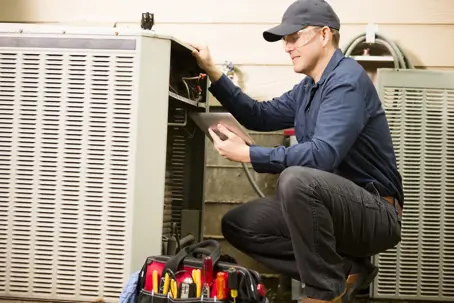
The difference between an inconvenience and an emergency looks very different when it is 105° outside in Riverside. When your AC suddenly stops cooling in that kind of heat, it is natural to feel a surge of panic, grab your phone, and start searching for emergency HVAC repair in Riverside CA.
Not every issue justifies an emergency call, but some absolutely do, especially in our Inland Empire climate. As a Carrier President’s Award recipient and Carrier Factory Authorized Dealer, we have seen how knowing the difference saves our customers money, protects their homes, and, in extreme heat, protects their health.
We will walk through a simple, practical way to decide whether you need immediate service or can safely schedule a routine visit, with specific guidance for Riverside and Inland Empire conditions.
What Makes an HVAC Problem a True Emergency
An HVAC problem becomes a true emergency when it meets at least one of three criteria: it threatens safety, risks significant property damage, or causes loss of essential temperature control during dangerous weather.
Here in Riverside, that third category matters a lot. From late May through September, our area regularly sees temperatures above 100°F, and the number of 100-degree days has nearly doubled since 2000. In that kind of heat, a complete cooling failure can push indoor temperatures to unsafe levels in just a few hours, especially in upstairs spaces, mobile homes, or poorly insulated houses.
That is not just uncomfortable. Riverside County recorded 1,627 emergency room visits and 65 deaths from heat-related illness in 2024. The City of Riverside’s Office of Emergency Management lists extreme heat as a public health hazard for a reason. If your AC quits entirely during a triple-digit stretch, and you have young children, older adults, or anyone with respiratory or heart conditions at home, that is an HVAC emergency.
Signs That Require Immediate Service
Some symptoms are clear red flags. If you see or smell any of these, treat them as urgent issues and act right away.
- Burning smell, smoke, or sparks. A strong burning odor, visible smoke, or sparks from your indoor or outdoor unit point to electrical failure or overheating components. Turn the system off at the thermostat and, if safe, at the breaker. Do not keep “seeing if it will run.” Running it longer can turn a repairable problem into a fire.
- Gas odor near your furnace or gas HVAC equipment. If you smell sulfur or rotten eggs around your furnace or gas line, leave the home immediately. Do not flip light switches, use your phone near the leak, or try to relight anything. From a safe location, contact your gas utility first, then an HVAC technician once the utility confirms it is safe to re-enter.
- Loud grinding, banging, or scraping sounds. A harsh grinding, metal-on-metal scraping, or violent banging from your indoor or outdoor unit usually means a major mechanical problem, such as a failing motor or loose internal parts. Shut the system down. Continuing to run it can turn a fixable component repair into a compressor failure or full system replacement.
- Repeated breaker tripping with burning smell. If your HVAC breaker trips repeatedly and you notice warmth at the panel or a burning odor, do not keep resetting it. This combination signals a serious electrical fault that needs immediate, professional attention.
- No cooling during extreme heat with vulnerable occupants. During a triple-digit day, if your AC stops cooling entirely and indoor temperatures are climbing, treat it as an emergency if anyone in the home is elderly, very young, or has medical conditions that make them vulnerable to heat-related illness. In our climate, loss of cooling in those situations is a health risk, not just a comfort issue.
Problems That Can Wait for a Scheduled Appointment
Many HVAC issues are important, but not urgent. These can usually wait for normal business hours without putting anyone at risk or seriously damaging the system.
- Soft new sounds without other symptoms. A light rattling, gentle humming, or soft whistling that is new but not loud or harsh often points to minor wear, loose panels, or airflow issues. Make a note of where and when you hear the sound and schedule a regular service visit.
- Uneven temperatures from room to room. Hot and cold spots, especially in larger or two-story homes, are usually related to duct design, dampers, or airflow balance. They are frustrating and increase energy use, but they are rarely an emergency.
- Rising energy bills with normal comfort. If your system still cools or heats adequately but your utility bill has crept up, you are likely dealing with reduced efficiency. Dirty filters, aging parts, or incorrect refrigerant charge can all cause this. A scheduled tune-up or diagnostic visit is the right move.
- Brief burning smell on first furnace startup. When you switch on your heater after months of no use, a light burning or “dusty” smell that goes away within a few minutes is often just dust burning off the heating elements. If it clears quickly and doesn’t return, it usually doesn’t require emergency service.
- Short cycling without extreme conditions. Short cycling means the system turns on and off more frequently than it should. It can stem from thermostat placement, airflow issues, or component problems. While it is not something to ignore, it is rarely an immediate safety threat if outdoor temperatures are moderate. Schedule a visit soon to prevent unnecessary wear.
The Middle Ground: Borderline Situations Inland Empire Homeowners Face
Some problems fall in between “fix it now” and “wait until next week.” In Riverside and the Inland Empire, outdoor temperature and household vulnerability often tip these borderline cases one way or the other.
- AC running but barely cooling during extreme heat. If your system runs constantly on a 100°F day but barely cools, you might be dealing with low refrigerant, a refrigerant leak, a failing capacitor, dirty coils, or an evaporator coil freeze. On a mild day, this might be a standard service call. During a heat wave, indoor temperatures can climb to unsafe levels, especially in upstairs spaces. If the home is getting hotter despite continuous operation, and anyone inside is at risk of heat-related illness, treat this as urgent.
- Water around the indoor unit. A condensate drain clog is a common cause of water pooling near your indoor unit. While it is not usually dangerous in the next hour, water can damage flooring, drywall, and framing within days and can promote mold growth. In most cases, same-day or next-day service is wise. If water is actively dripping through ceilings or near electrical components, move it closer to the “emergency” side of the line and shut the system down until it is checked.
- Intermittent short cycling in high heat. When short cycling happens during a stretch of triple-digit temperatures, it puts extra strain on the compressor and other components. A failing capacitor can cause the system to start and stop frequently, leading to compressor strain and possible failure. If the system is short cycling and struggling to keep up during a heat wave, call for prompt service rather than waiting weeks.
- Odd smells that are faint or hard to place. A mild, musty odor can indicate moisture or mold in ducts or around the air handler. It is not an hour-by-hour emergency but should not be ignored, especially for anyone with asthma or allergies. Schedule service soon, and if the smell suddenly becomes strong, chemical, or burning, shut the system off and move it into the “immediate service” category.
When you are unsure, use this rule: if outdoor temperature, vulnerable people in the home, or visible damage make the situation feel risky, treat it as urgent and call. We would much rather talk through symptoms with you and reassure you that a routine appointment is fine than have you wait on something that becomes dangerous.
Before You Call: A Quick Self-Check
A few simple checks can sometimes solve the problem or at least give us better information when you call. Only do these if there is no burning smell, smoke, or gas odor.
- Confirm thermostat settings. Make sure the thermostat is set to “cool” for AC or “heat” for heating, and that the temperature is set below (for cooling) or above (for heating) the current room temperature. Check that no schedule or “hold” setting is overriding what you expect.
- Check the air filter. A heavily clogged filter can cause weak airflow, short cycling, and even an evaporator coil freeze. If the filter is visibly dirty or you cannot see light through it, replace it and see if performance improves over the next hour.
- Look at the breaker panel. Find the breaker labeled for your HVAC or air conditioner. If it is tripped, reset it once. If it trips again quickly, stop resetting it and call for service. Repeated tripping suggests an underlying electrical problem that needs a technician.
- Inspect supply and return vents. Ensure furniture, rugs, or curtains are not blocking major supply vents or the main return grille. Blocked airflow can mimic bigger system problems.
- Note what you see, hear, and smell. Pay attention to when the problem started, any unusual sounds, smells, or patterns, and whether it changes during the day. Sharing these details with us can shorten diagnostic time and reduce the total cost of the visit.
How Routine Maintenance Prevents the Emergency Call
Many emergency breakdowns start as small, inexpensive issues during normal weather. Regular pre-season HVAC maintenance is one of the most effective ways to avoid frantic calls during the hottest and coldest days of the year.
During a tune-up, we test electrical components like capacitors, which help motors start and run. A weak or failing capacitor is typically a simple, relatively low-cost part to replace when caught early. If it is ignored, that same weakness can force the compressor to work harder every time it starts, leading to compressor strain and, eventually, compressor failure. In the middle of a Riverside heat wave, that difference can be thousands of dollars.
Because we keep our service vehicles stocked with common replacement parts, including capacitors, contactors, and other frequent-failure items, we can usually handle these component repairs the same day without a return visit. That reduces downtime and often keeps a borderline situation from crossing into true emergency territory.
Our team also watches for refrigerant charge issues, early signs of a refrigerant leak, dirty coils that can lead to an evaporator coil freeze, and condensate drain conditions that can cause water damage later. Catching and correcting these issues during maintenance not only improves comfort and efficiency, it makes it far less likely that you will wake up to a system that has quit on the hottest day of the year.
At the same time, we track available rebates and incentives on new HVAC equipment in Riverside. If we discover during maintenance that your system is nearing the end of its useful life, we can talk through replacement options and potential savings while you still have a working system, instead of trying to make big decisions under emergency pressure.
Putting It All Together: When to Call Right Now
The core framework is simple: treat anything involving smoke, sparks, strong burning or gas smells, or repeated breaker tripping as an emergency. During triple-digit Inland Empire heat, add full loss of cooling or barely functioning cooling, especially in homes with vulnerable occupants, to that urgent list.
Softer symptoms like mild noises, uneven temperatures, or gradual efficiency loss can usually wait for a scheduled visit, as long as outdoor conditions are not extreme and no one’s health is at risk. Borderline issues, like an AC that is running but not keeping up on a very hot day or a growing puddle near your indoor unit, deserve prompt same-day or next-day attention, even if they are not emergencies in the strictest sense.
If you are unsure where your situation falls, you do not have to guess alone. We are happy to talk through what you are seeing and help you decide whether immediate service is necessary or a scheduled appointment is the better fit. Whether you need urgent help or a routine tune-up in Riverside and Inland Empire, you can reach our team at Sheldon's Heating, Air Conditioning & Plumbing at (951) 574-2226.